
Don't Bite the Healing Hand
Crucial lessons from Exodus 2:11–25

Sometimes a wounded pet will bite you.
You pick him up to help but press the sore spot by accident. In pain and fear he snaps and draws blood. This makes it very hard to treat the injury, which gets worse, which brings more pain and fear . . . a death spiral.
When God’s Son came to rescue us – injured by sin and the Fall, groaning in pain and distress – rather than receiving him with relief and grateful hearts, we turned and struck him. “He came to that which was his own, but his own did not receive him” (John 1:11).
So the Gadarenes begged Jesus to “Go away!” The Pharisees cried “Beelzebub!” The Passover crowd shouted “Crucify him!” But John thinks of us all; that we have all in some way “not received him.”
The rejection of the Saviour was pre-seen in the life of Moses. We will read Exodus 2 in the light of Stephen’s Acts 7 speech before the Sanhedrin.
Moses the Vigilante
Moses was born a Hebrew slave but raised an Egyptian prince. He had two mothers: one his natural Hebrew mother, the other his adoptive Egyptian mother. He inherited two cultures and religions, two ways of looking at the world.
On one side he is a descendent of Abraham, an heir of the LORD’s great covenant blessings: “I am your shield, your very great reward;” “I am God Almighty; walk before me faithfully and be blameless” (Gen 15:1; 17:1). As a Hebrew, God himself would be Moses’ LORD, his Treasure, his Joy, his Future, his All.
On the other side Moses is an heir of the pagan pharaohs who worshipped the gods of nature and the afterlife; who devoted themselves to the honours and treasures of this life, and who hoped for a continuation of these honours and treasures after death.
Moses then is a “dual citizen,” the inheritor of two patrimonies, with two possible futures ahead of him. There are two Moseses.
Sometimes we look at our ourselves and see two people. Especially when we are young. Among some people we are one person; among others we are a different person who behaves quite differently. We know that we should be one or the other, that we should have integrity, which means literally to be unbroken, without parts, whole, complete.
That was Moses, until:
Exodus 2:11 One day, after Moses had grown up, he went out to where his own people were and watched them at their hard labour. He saw an Egyptian beating a Hebrew, one of his own people.
Now aged forty Moses went to see “his own people.” He inspects a farm or a building site; he watches the slaves toiling. An Egyptian beats a Hebrew, “one of his own people.” Notice how Moses emphasises that the Hebrews are “his own people.”
This beating brings him to a crossroads, a life decision. How will he respond? How will he live from this moment? As an Egyptian or a Hebrew? As an heir of the pharaohs or of Abraham? As a prince or a pauper? Living for earthly honours and treasures or with the LORD as his inheritance? Pursuing sinful pleasures or obeying the LORD?
Exodus 2:12 Looking this way and that and seeing no one, he killed the Egyptian and hid him in the sand.
Stephen says that Moses “went to the to the defence” of the Hebrew slave, “and avenged him by killing the Egyptian” (Acts 7:24). He intended good, but the doing was bad. Moses takes the law into his own hands and lynches the man, furtively, unlawfully, as a vigilante. Hiding the body smacks of a guilty conscience. “This cost him another forty years of education,” writes Walter Kaiser.
Yet this is a no-turning back moment. In killing the Egyptian Moses has killed his future as a Prince of Egypt. Moses has chosen the LORD!
By faith Moses, when he had grown up, refused to be known as the son of Pharaoh’s daughter. He chose to be ill-treated along with the people of God rather than to enjoy the fleeting pleasures of sin. He regarded disgrace for the sake of Christ as of greater value than the treasures of Egypt, because he was looking ahead to his reward (11:24–26).
But things don’t go well:
Moses the Rejected
Exodus 2:13 The next day he went out and saw two Hebrews fighting. He asked the one in the wrong, “Why are you hitting your fellow Hebrew?”
Are you quarrelling? Fighting your family, your Christian brothers and sisters? Hear Moses’ question: “Why are you hitting your fellow?” Striking them with harsh words, unforgiveness, or evil thoughts?
The culprit is indignant:
Exodus 2:14–15 The man said, “Who made you ruler and judge over us? Are you thinking of killing me as you killed the Egyptian?” Then Moses was afraid and thought, “What I did must have become known.”
Stephen goes to the heart of the matter: God was indeed choosing Moses to be the Hebrews’ ruler, judge, and deliverer, and would soon confirm this. By rejecting Moses’ leadership – however pre-emptive and unlawful his first rescue attempt had been – Stephen knew they were already preferencing Egypt over the LORD:
They rejected Moses with the words, “Who made you ruler and judge?” He was sent to be their ruler and deliverer by God himself. . . . Our ancestors refused to obey him. Instead, they rejected him and in their hearts turned back to Egypt (Acts 7:35, 39).
Stephen shows how the offended slaves foreshadowed the Pharisees’ rejection of Christ:
You are just like your ancestors: you always resist the Holy Spirit! Was there ever a prophet your ancestors did not persecute? They even killed those who predicted the coming of the Righteous One. And now you have betrayed and murdered him (Acts 7:51–52).
The scornful Hebrew slave reflects every human heart. We spurn God and his Saviour to embrace a thousand forms of atheism, agnosticism, deism, idolatry, and egotism.
Neither is Pharaoh pleased. No doubt he fears Moses as a revolutionary leader:
Exodus 2:15 When Pharaoh heard of this, he tried to kill Moses, but Moses fled from Pharaoh and went to live in Midian, where he sat down by a well.
The Hebrews rejected Moses. Pharaoh wants him dead. This depressing two-pronged assault would play out time and again in the years ahead.
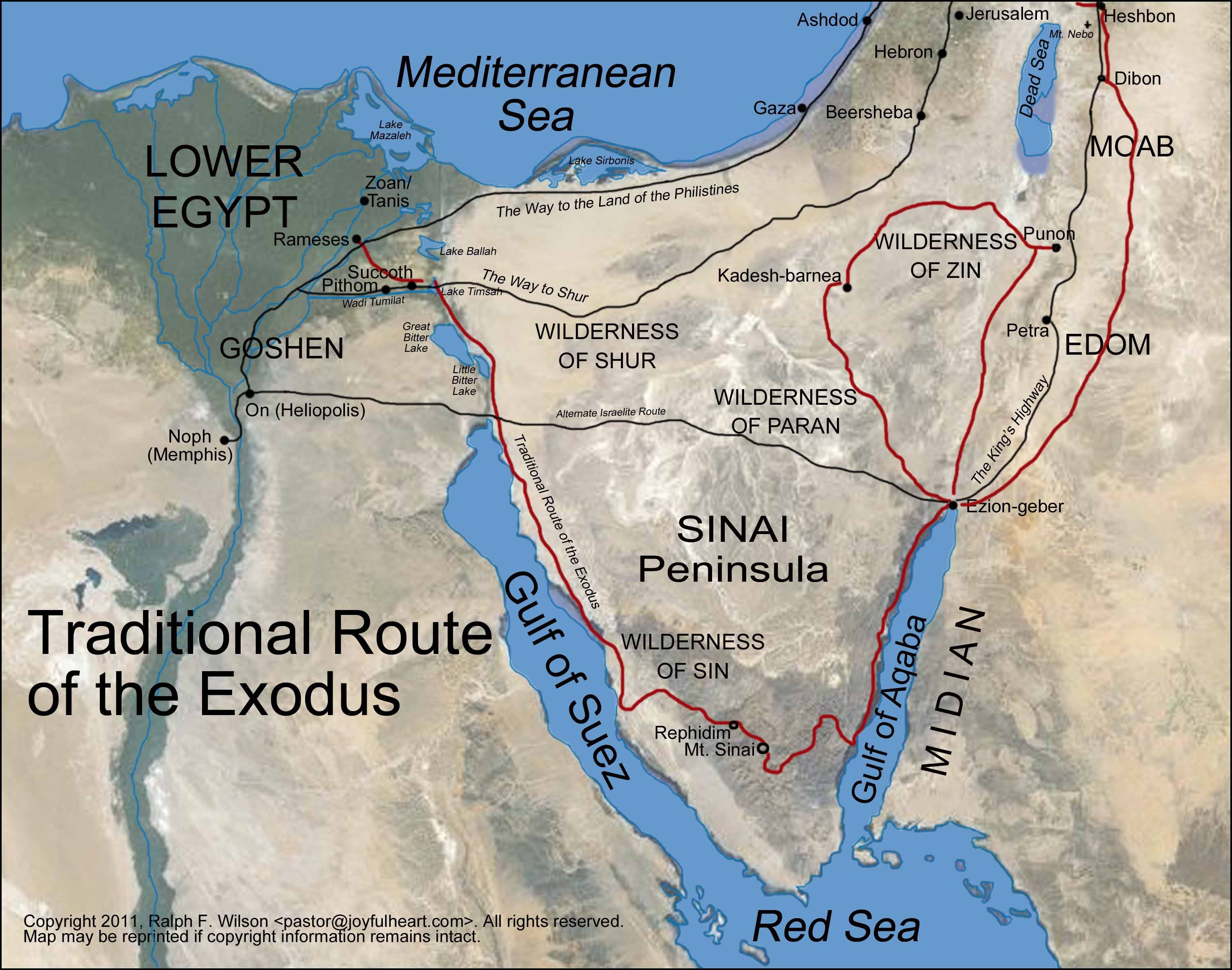
Moses flees southeast across the Sinai desert, where he would later spend forty years with Israel. He treks to Midian, some 500 kilometres from Egypt, about twenty days on foot or ten days by camel. He finds the descendants of Midian, the son of Abraham born to his second wife Keturah (Gen 25:2).
After all the fighting and killing and running Moses finds a well and just sits. Just like his ancestor Jacob four-hundred years earlier. And just as before God will fulfil his plan in his way at his time, despite human sin and ineptitude.
Moses the Foreigner
Exodus 2:16–22 Now a priest of Midian had seven daughters, and they came to draw water and fill the troughs to water their father’s flock. Some shepherds came along and drove them away, but Moses got up and came to their rescue and watered their flock.
When the girls returned to Reuel their father, he asked them, ‘Why have you returned so early today?’ They answered, ‘An Egyptian rescued us from the shepherds. He even drew water for us and watered the flock.’ 20‘And where is he?’ Reuel asked his daughters. ‘Why did you leave him? Invite him to have something to eat.’ Moses agreed to stay with the man, who gave his daughter Zipporah to Moses in marriage.
Zipporah gave birth to a son, and Moses named him Gershom, saying, ‘I have become a foreigner in a foreign land.’
The descendants of Midian had retained some true worship, for in Exodus 18 Reuel, also called Jethro, makes a lawful burnt offering with Moses.
Moses, ever eager to assist the weak, rescues Reuel’s daughters from some shepherd-bullies and draws water for them. A good days work.
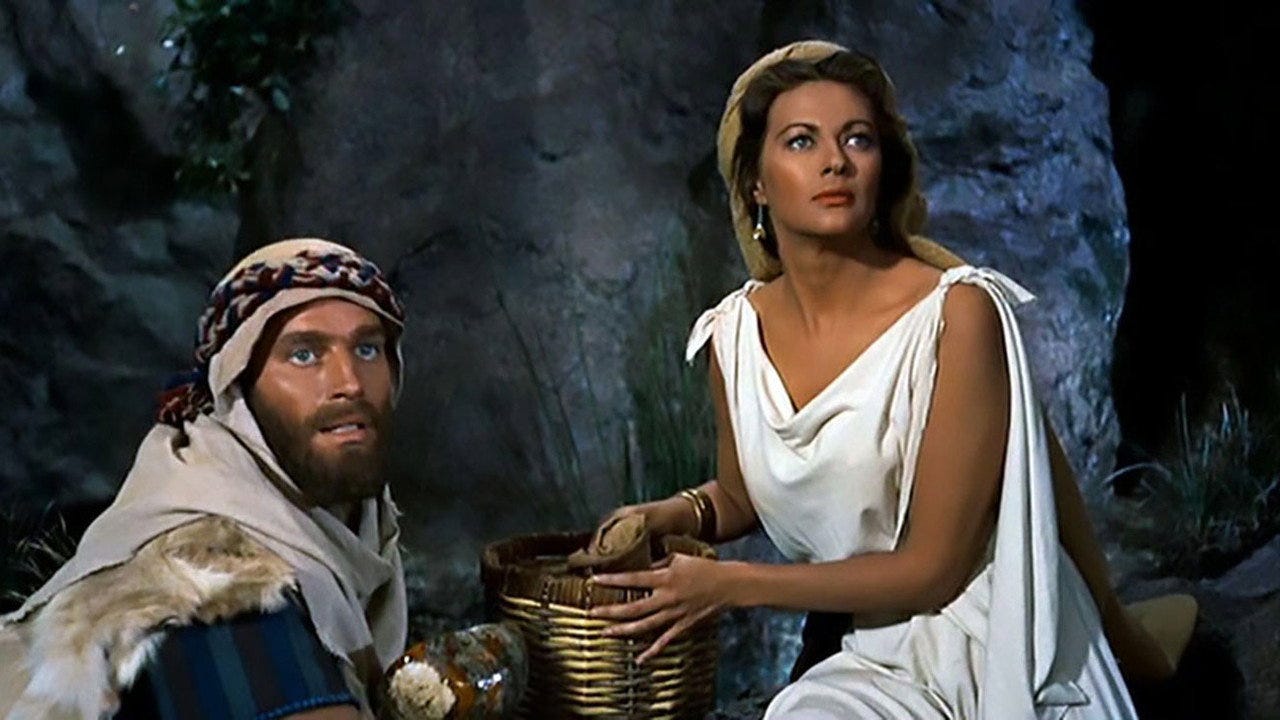
With clear echoes of Jacob at Paddan Aram Moses is embraced by the family. He marries Zipporah, “Sparrow.”
Moses names his son Gershom, “Banishment.” Banished from Egypt. Exiled from Canaan, the Promised Land. He is in every way “not of this world.”
But “He regarded disgrace for the sake of Christ as of greater value than the treasures of Egypt, because he was looking ahead to his reward” (Heb 11:26).
Lessons
Beware of being different with different people: pursue integrity.
Help the weak and vulnerable.
Never take the law into your own hands; as far as possible seek lawful justice.
Beware of striking others by your words or actions.
God’s Saviour is rejected by those he came to save.
The LORD calls you to forsake the passing sinful pleasures of this world.
The LORD calls you to make him our Treasure: to “seek first the Kingdom of God.”
Count yourself and live as a citizen of heaven.
God will keep his salvation plan in his way and in his time.
Receive God’s Saviour Jesus Christ!