
Be Free!
Don’t go back to the slavery of legalism, ritualism, and materialism. Galatians 4:8–11


“What have you done to us by bringing us out of Egypt? Didn’t we say to you in Egypt, ‘Leave us alone; let us serve the Egyptians’”?
Though God redeemed Israel from four centuries of Egyptian slavery, at the cost of the blood of the spotless Passover Lamb, they immediately hankered for their old chains. Every fresh challenge provoked the same cry, “Take us back to Egypt, back to the whips and restless toil!”
Identically, no sooner had the Galatians found freedom by faith in Jesus Christ than they were tempted back to their old slavery.
The same potent pullback lurks within us too. Which is why we must hear Paul’s passionate exhortation to the Galatians:
Galatians 4:8–11 Formerly, when you did not know God, you were slaves to those who by nature are not gods.
9But now that you know God—or rather are known by God—how is it that you are turning back to those weak and miserable elements? Do you wish to be enslaved by them all over again?
10You are observing special days and months and seasons and years!
11I fear for you, that somehow I have wasted my efforts on you.
You Were Slaves
Before they were Christians the Galatians “did not know God.” We will see exactly what this means in verse 9 but suffice at this point to say that “knowledge” speaks not of “knowing about” but of “knowing personally,” of relationship. Before faith in Christ the Galatians were not living coram Deo, in the presence of God in right relationship with him.
They were instead “slaves to those who by nature are not gods,” to useless nonentities.
The Roman Empire was built on a slave economy: an estimated one in three were enslaved in Rome itself. Some slaves toiled in salt mines or rowed in naval galleys until death by exhaustion. Other slaves worked in more humane conditions as domestics, teachers, nannies, or managers. What defined a slave was a person whose life and labour belonged to and was controlled by another. They could not do what they willed, but only what their master willed.
Though the Galatian Christians had been converted from various Jewish and heathen heritages they had all once been enslaved to certain “unreal gods.” Paul carefully chooses words that might describe any non-existent objects of awe and obedience. To what revered nonentities was the Galatians’ life and labour and will enslaved to?
The slavery of legalism
Read in the context of verse 9, which describes the Galatians returning to “the basic elements” of the law, to “special days and months and seasons and years,” we hear Paul speaking directly to converted Jews. They had been chained to the rituals of the Old Testament, to circumcision, food laws, and the festivals, to the “pedagogue” which led them to Christ but whose job was now complete.
They had been enslaved to the control of these things: “You must carefully and diligently keep these laws in order to be in the right with God!” Laws which “by nature are not gods,” which in fact have no power to restore us to a right relationship with God.
The slavery of ritualism
The sixteenth-century Reformers applied this teaching to legalistic ritual. Medieval Roman Catholicism demanded attendance at the mass, conducted in Latin, which no one could understand—often not even the priest himself. It demanded fasts, prayers to saints, payment of church taxes, and the purchase of indulgences: fraudulent certificates purporting to shorten a loved one’s time in the fires of purgatory.
The Reformers saw all this as a dreadful slavery: lives and wills chained to an empty and unscriptural system of rituals, antithetical to saving trust in Jesus Christ. These revered things were “by nature not gods.” They were powerless to restore people to a right relationship with God.
The slavery of materialism
Today, Western peoples are enslaved to materialistic self-fulfilment.
From the cradle we are taught, explicitly or by omission, that we are not created by God in his image to live in his presence, to glorify and enjoy him. We are instead the chance result of natural evolutionary processes. We are materially indistinct from the apes, algae, or asteroids. What differentiates us is the electrochemical illusion of self-awareness: the capacity to hate pain, but to enjoy food, love, sex, art, music, nature, travel, and “experiences.”
On a recent flight I was subjected to the relentless marketing of Viking Cruises: “Five Oceans, Twenty-One Rivers, Seven Continents.” Phew. Marketed to Gen Xers and Boomers, their sumptuous promotional videos parade older and important looking people—healthy, handsome, tailored, smiling—attended by butlers, quaffing Krug and poached langoustines, and contemplating Norwegian fjords under golden sunsets. All with “No Children” to jangle one’s nerves.
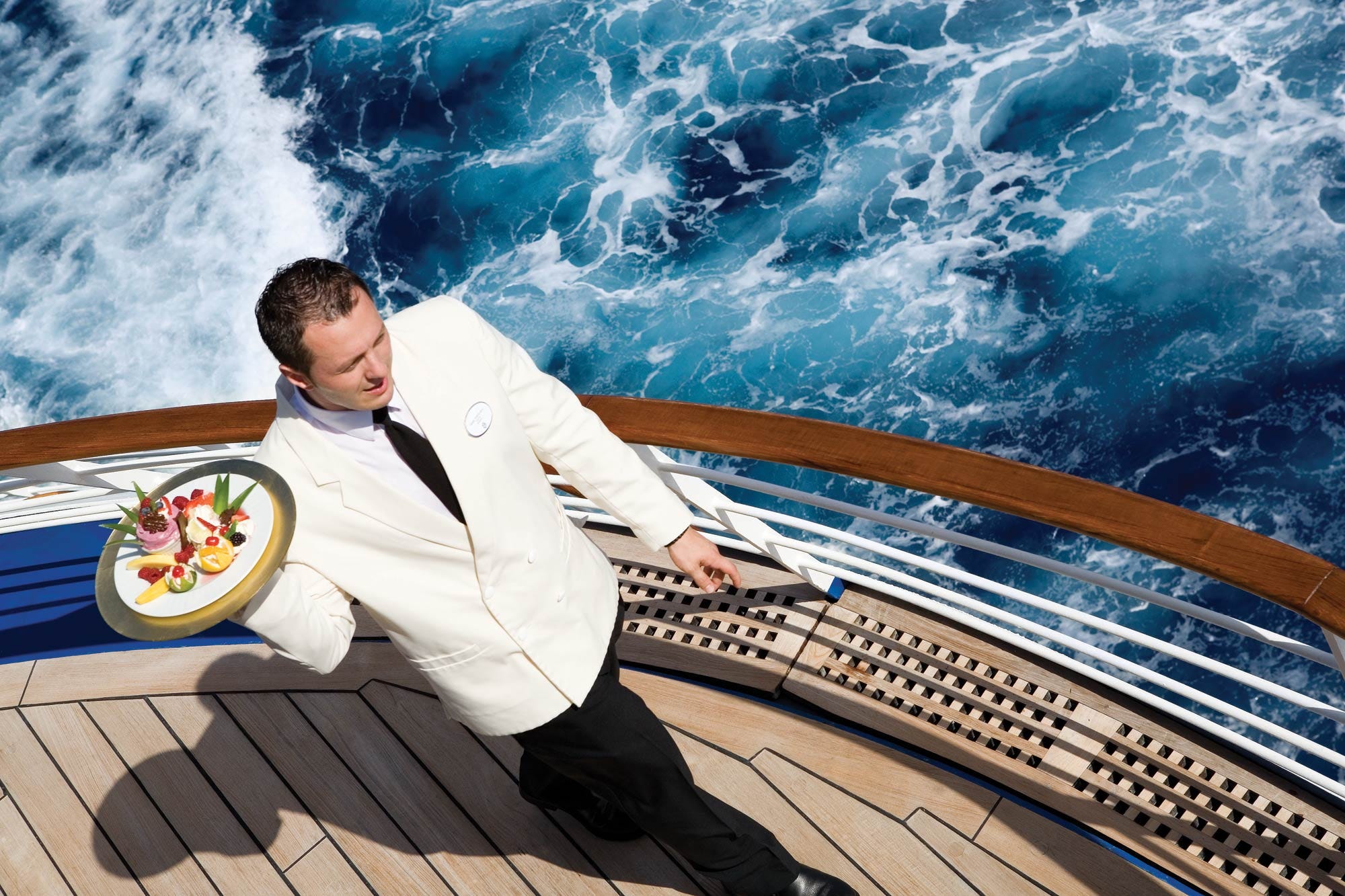
This is the very expensive and very ephemeral concrete manifestation of the Western materialist’s heaven. “I am important, give me romance and sexual fulfilment, satisfy me with food, health, and beauty. Speak not of God, worship, accountability, and judgment.”
Yet materialistic self-fulfilment is also a cruel and mad slavery. It degrades divine image bearers into simian gourmands. It gouges out our eyes and blinds us to our Creator. It makes creation—which was given by God to serve us, to reflect his glory and inspire us to rapturous and delightful praise of his power, eternity, wisdom, beauty, holiness, and love—an end in itself.
That is why earthly pleasures alone can never satisfy. Excised from God they are cups of sea water. They only ever enrage the thirst.
What links Jewish legalism, medieval ritualism, and metaphysical materialism is self-determination. “If I observe the festivals, if I attend mass and pray to the saints and buy an indulgence, or if I buy into materialism, then I can keep God at arms-length and do what I want besides.”
They are linked also by their misery. Neither legalism, ritualism, nor materialism can heal us from deterioration and death, or assuage our troubled consciences. They cannot cleanse our evil hearts which, says our LORD, are the wellsprings of violence, oppression, greed, faithlessness, dishonour, lies, and injustice.
None of these “non-existent gods” can give us right standing at our Final Judgment.
Christless self-determinism is lose-lose, “the worst of slaveries”: a lifetime of gnawing misery now, finally rewarded with an eternity in the unquenchable fire of God’s wrath.
Now you Know God and are Known by Him
We live now in Beth-El, the House of God, in the light of his love and grace.
In the Bible “knowing God” is much more than knowing about God. In Hebrew “to know” (ידע, yada) a person is to be in relationship with that person. “Adam knew Eve his wife, and she conceived.”
Once we were separated from the coram Deo, not wanting to know God or to live his ways. He was the object of our unbelief, dislike, and fear. But by faith in Jesus Christ we have been reconciled to God and he has adopted us as his own sons and daughters. We now look to him as our Abba, our Beloved Father, our Revered Heavenly Dad.
That is why Paul clarifies: “But now you have come to know God—or rather to be known by God.” You are a Christian because God took the initiative, chose you, and set his love upon you:
John 15:16 You did not choose me, but I chose you.
1 John 4:10 This is love: not that we loved God, but that he loved us and sent his Son as an atoning sacrifice for our sins.
Romans 5:8 God demonstrates his own love for us in this: while we were still sinners, Christ died for us.
A thousand Viking Cruises could never replicate this joy.
Christ’s death has expunged our sins. Christ’s resurrection has won us abundant and everlasting life. God has freed us from slavery to legalism, ritualism, materialism. He has adopted us and we are his children and heirs. We live now in Beth-El, the House of God, in the light of his love and grace. He turns stones of suffering into loaves of blessing. He makes our death a victory.
The wonders of God’s creation and providence retake their rightful place as our servants and, as Calvin taught, the theatrum gloriae, the dazzling theatre of God’s glory.
Don’t Turn Back!
In Genesis 19 two angels pull Lot and his family to safety from doomed Sodom. “Flee for your lives! Don’t look back!” But Lot’s wife did look back. Sodom’s godless pleasures were hard to leave behind. God turned her into a pillar of salt, a physical manifestation of a heart that was hard and dead towards him.
Jesus drew a vital lesson: “Remember Lot’s wife! Whoever tries to keep their life will lose it, and whoever loses their life will preserve it” (Luke 17:32–33).
There will always be strong temptations to pull away from Christ and back to self-determining legalism, ritualism, and materialistic self-fulfilment.
The Galatians, like Lot’s wife, were succumbing to this temptation. Will we do the same?
New Christians and seekers, beware of the powerful pullback. Remember Lot’s wife! Remember why you looked to Christ and the Bible in the first place.
Older Christians, beware of complacency. If you don’t fear lukewarmness you are in a truly dire position.
All Christians, beware of unrepentant sins: sins you haven’t put to death. These are the devil’s slave catchers. They will drag you back into bondage.
Let us all renew our repentance and faith in Jesus Christ!